Essay Preview
Centre of Buddhist Studies
CCCH9044 Dunhuang and the Silk Road:
Art, Culture and Trade
Essay Topic: (Topic 19) Explore how AI can help and harm the preservation of
endangered Buddhist heritage, using the Dunhuang Grottoes as a
case study.
Student Name: SHING, Zhan Ho Jacob
UID: 3036228892
Word Count
1
: 3025
1
The word count is calculated by a computer programme automatically, excluding the cover page, cita-
tions (e.g. “Chen et al., (2024)”), references, footnotes, and captions and notes in figures.
1
Page 1 of 14

1 Introduction
Since its discovery, the Dunhuang Grottoes have been an important site for the study
of Buddhist art and several important aspects of Chinese history, including the trade events
via the Silk Road, etc. While a large quantity of artefacts like the murals and sculptures
have survived thousands of years to be presented in this modern age, the artefacts are
facing significant threats from various factors. A study of X. Jiang et al. (2023) has shown
that the despite the lack of immediate risk of preservation due to the drastic climate change
in the past few decades, the artefacts are still prone to deterioration due to the weathering
effects of the natural environment. Therefore, the preservation of the Dunhuang treasures
is of utmost importance and a race against time (Yu et al., 2022). Measures with high
efficiency are needed to ensure the survival of the cultural heritage.
In view of the above, the Dunhuang Research Academy (DHA) was established in
1944 and is now devoted to applying modern technologies to the preservation of the Dun-
huang Grottoes. While one takes advantage of the efficiency and convenience of modern
technologies, such as Artificial Intelligence (AI), one must also be careful about the po-
tential damages that may be imposed on the cultural heritage. This essay aims to explore
the current applications of the AI technology in the preservation of the Buddhist her-
itage, using the Dunhuang Caves as a case study. In the Literature Review section, some
cutting-edge AI applications in the archaeological field will be briefly explored. Then,
in the following two sections, the benefits and potential risks of these applications will
be discussed. Finally, a conclusion on the topic will be included, with a hope that the
discussion would provide new insights into the process of critically evaluating the use of
AI in the preservation of cultural heritage.
1.1 Terminology
Since the topics “cultural heritage”, “preservation” and “AI” are all broad, it may be
helpful if these terms are defined before the discussion commences.
1.1.1 Buddhist Heritage and Cultural Heritage
In the context and the scope of discussion of this essay, the term “Buddhist heritage”
and “cultural heritage” are treated as the same, and they refer to both the artefacts and sites
of the Dunhuang Grottoes. The “artefacts” include the mural paintings, sculptures, and
manuscripts. This definition is consistent with that of the current standard as suggested by
United Nations Educational, Scientific and Cultural Organization [UNESCO] (2024b).
1.1.2 Preservation
As suggested by UNESCO (2024a), the conservation and preservation of cultural her-
itage are means taken to elongate the lifespan of the heritage and to convey its significance
to the future generations. Therefore, the term “preservation” would imply two aspects:
the technical aspect of protecting the existence of the artefacts and sites, and the human
aspect of public education and raising awareness.
2
Page 2 of 14

1.1.3 Artificial Intelligence
Contrary to the common generic definition of AI as “the simple theory of human
intelligence being exhibited by machines” (Helm et al., 2020, p. 69), this essay will refer
to AI simply as a set of tools utilising Machine Learning (ML), Convolutional Neural
Networks (CNNs), Large Language Models (LLMs), and Natural Language Processing
(NLP) technologies dedicated to the analysis and processing of images and texts for the
purpose of preserving cultural heritage.
2 Literature Review
Current AI applications in the study and preservation of Dunhuang Grottoes can be
roughly categorised into image-related techniques and text-related techniques.
2.1 Computer Vision and Image Processing
Algorithms specialised in computer vision and image processing, such as CNNs, Rev-
olutional Neural Networks (RNNs), and Generative Adversarial Networks (GANs), and
hybrids of these algorithms are most prominently used in the handling the murals of the
Dunhuang Grottoes (Fu et al., 2025; Yu et al., 2022).
For the restoration of damaged murals, conventional patch-based methods (Ballester
et al., 2001; Bertalmio et al., 2000) allowed automatic inpainting of small and simple
damaged areas. Their inability to handle larger and more complex missing areas have
been overcome by modern use of CNNs (Pathak et al., 2016; Yang et al., 2017). In recent
years, Song et al. (2018), as cited in Yu et al. (2022) proposed a more modern approach,
allowing the restoration and inpainting be context-aware, i.e. the algorithm would re-
construct the missing parts by considering the surrounding context, rather than simply
predicting pixels mathematically. Similar means include systems built on CNNs and the
ResNet-50 architecture, which are employed by the British Museum and Le Mus
´
ee du
Louvre (the Louvre Museum) for damage recognition (Fu et al., 2025). Recent studies
carried out by Chen et al. (2024) proposed a hybrid approach of joint learning, further
improving the errors produced by the AI models by allowing the models to learn from the
global context of the murals, rather than just the local context.
For creating arts in the visual style of the Dunhuang murals through AI, specialised
algorithms referred to as the “style transfer” algorithms are used (Sun and Gao, 2023;
Yu et al., 2022). While Yu et al. (2022) mentioned certain limitations of the algorithms
built on the CNNs, such as lack of flexibility and optimisation, an experiment carried
out by Sun and Gao, 2023. Apart from application on Dunhuang murals, a recent study
by Zhang et al. (2023) also mentioned advanced techniques for generating cultural and
creative products by replicating visual styles from the input.
As deep learning and AI technologies rely heavily on large datasets, the demand of
labelling imagery data, especially for the research of Dunhuang Grottoes, is high (Fu
et al., 2025). Seeming to be paradoxical, the use of deep learning itself is the de facto
solution for training deep learning models for labelling images and objects automatically.
X. Jiang et al. (2019) introduced some of the commonly used state-of-the-art models for
object detection, including R-CNN and Fast R-CNN (two-stage detectors), and You Only
3
Page 3 of 14

Look Once (YOLO) and Single Shot Detector (SSD) (one-stage detectors), all of which
are achieving satisfactory results in terms of accuracy and speed. These models are now
widely employed by renowned museums for archaeological research and preservation,
such as the Metropolitan Museum of Art (Villaespesa and Crider, 2021), Emperor Qin
Shihuang’s Mausoleum Site Museum (Bevan et al., 2014), and, most importantly, the
Dunhuang Research Academy (Yu et al., 2022).
2.2 Natural Language Processing and Large Language Models
Text-related technologies, such as NLP and LLMs, are predominantly used in both
research and humanity aspects. As these technologies are often used in collaboration
with computer vision technologies, they are only briefly introduced in this section.
In the archaeological research aspect, NLP technology is often used to transcribing
and analysing the transcripts of orally told history (Fu et al., 2025). Fu et al. (2025)
also mentioned the use of LLMs in generating documentations for the artefacts, while
Manovich (2017), as cited in Fu et al. (2025) mentioned providing commentaries for
artefacts from innovative perspectives. In Dunhuang’s case, the DHA has been leveraged
the capabilities of AI to recover and identify characters from excavated manuscripts from
the Library Cave (Gansu Cultural Heritage Bureau, 2025).
In the humanity aspect, popular LLMs, such as ChatGPT, are used for interactive chat-
bots for public education and addressing public enquiries (Dunhuang Research Academy
[DHA], n.d.; N. Jiang, 2024; Shen et al., 2024), and also smart search engines allowing
users to look for specific artefacts with natural language (DHA, n.d.).
3 AI Technologies Benefiting Buddhist Heritage Preser-
vation
3.1 Automated Object Detection Accelerating Research
The current advancements in computer vision and deep learning technologies plays a
catalytic role in the research of the Dunhuang Grottoes. As Resler et al. (2021) mentioned,
the fundamental step for researchers in the archaeological field is to fit the excavated arte-
facts into their appropriate categories according to their features and attributes. It is not
uncommon that this process relies heavily on the workers’ mastery of knowledge, per-
sonal preferences over certain styles (Barcelo, 1995; Yu et al., 2022), and time dedicated
to repetitive tasks.
Prior to the emergence of computer vision, the process of classification relied com-
pletely on researchers’ manual efforts. An experiment carried out by Verschoof-van der
Vaart and Lambers (2021) studying the integration of deep learning models in the classi-
fication of archaeological artefacts has shown that the speed of work can be increased by
8 times. They also mentioned that the time of the researchers can be reallocated to other
steps in the analysis process, further enhancing the efficiency of the research.
In terms of applications in the preservation of Dunhuang Grottoes, the experiment by
Yu et al. (2022), employing multiple models and analysis metrics, has given varied results
4
Page 4 of 14

in terms of accuracy. The result showed that the YOLO v5-S model performed the best,
with the mean Average Precision (mAP
2
) of 0.6809.
However, these methods are not without flaws. The performance of object detection
models solely depends on the dataset on which that they were trained, which implies that
the number of already identified items directly dictates the accuracy in identifying objects
of the same kind. As Yu et al. (2022) pointed out, there lacks a balance in the number
of readily available labelled images of the artefacts in the e-Dunhuang dataset, which
may have resulted in the worst performance of the model when identifying non-Buddhist
figures, with accuracy of 0.6293 (while other categories reaching around 0.80).
To argue, it is important to recognise that the use of AI does not intend to subsi-
tute the researchers, but rather to act as a complementary tool to assist the current works
(Verschoof-van der Vaart and Lambers, 2021). An ideal workflow would be to use the AI
models for a rough classification and tagging of the artefacts, and then to employ the re-
searchers’ intervention to further sample and verify the results. While human intervention
is still required, the efficiency of the research is indeed enhanced. Therefore, it is reason-
able to conclude that the use of computer vision and deep learning technologies has high
potential in accelerating the research of the Dunhuang artefacts, thereby benefiting the
preservation work.
3.2 Image Inpainting Assisting Restoration of Artefacts
Endeavours have been made by several parties to restore the damaged murals and
manuscripts in the Dunhuang Grottoes. Historically, the restoration of the murals was
done by hand, whose biggest risk is the potential of secondary damage to the original
artefacts (Lian et al., 2025).
As discussed in Section 2.1, the performance of AI models and frameworks in im-
age inpainting is closely related to the complexity of the image to be restored. Easier
cases, such as small, repetitive decorative patterns (caisson paintings, for example) can
be restored with high accuracy, while more complex cases, such as the portraits of the
Buddhas and Bodhisattvas, tend to be more challenging. This variation of restoration ac-
curacy is a result from the models’ inability in extracting valid semantic information from
the murals (Lian et al., 2025), therefore not being able to preserve the artistic features of
the murals. The experiments by Yu et al. (2022) have also demonstrated this limitation.
In the latest developments, however, researchers have been able to overcome this is-
sue through the use of adversarial diffusion networks (Lian et al., 2025) and hybrid ap-
proaches (Chen et al., 2024). The improvements and outcomes of these methods are
significantly better than the traditional methods, as shown in Figure 1 and Figure 2.
Apart from the murals, important milestones have also been achieved in the restoration
of the manuscripts from the Library Cave. The DHA has been working in collaboration
with technology companies to leverage generative artificial intelligence (GenAI) to re-
store and generate the missing parts of excavated manuscripts (H. Li, 2024). While the
technical details of the algorithms are not disclosed, it is not difficult to imagine that the
2
The mAP is a metric measuring the model’s capabilities in correctly detecting and locating objects in
images. The higher the value, the better the model’s performance.
5
Page 5 of 14
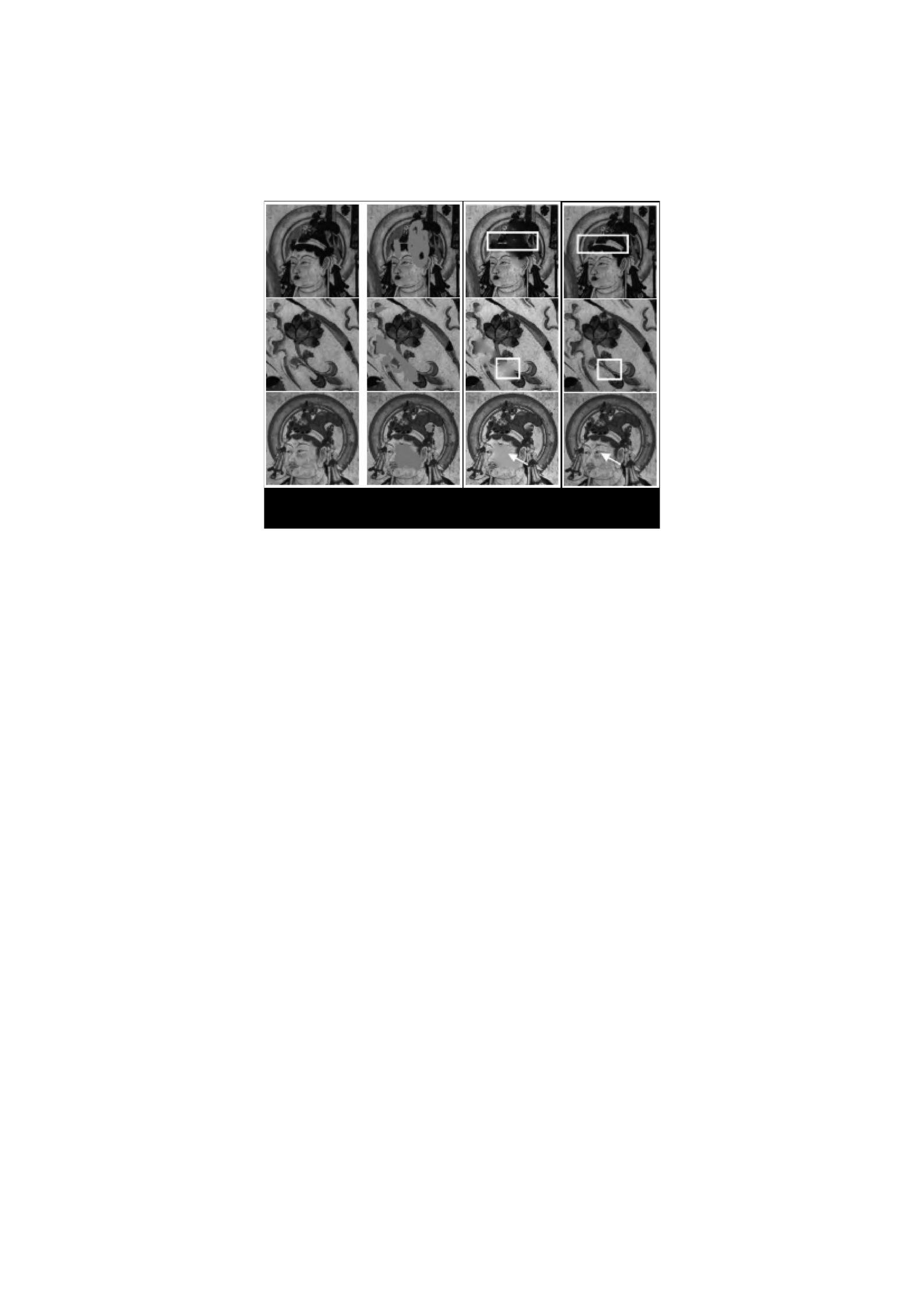
Figure 1
Results of the hybrid image inpainting algorithms on simulated damaged murals of complex pat-
terns
Note. Results of the hybrid image inpainting method showed satisfactory results in restoring com-
plex patterns, such as the facial features of the Bodhisattva, when compared to the traditional
method. Adapted from “Mural Inpainting Algorithm Based on Semantic Reasoning and Joint
Learning”, by Chen et al., 2024, Journal of Beijing University of Posts and Telecommunications,
47(5), 73–80.
approach has made use of image and text processing technologies built on deep learning
and NLP, and also the use of large datasets of calligraphy for the purpose of identifying
variants of the same Chinese characters. H. Li (2024) has remarked that the generated
contents are of promising quality and reliability. Whereas this application is still in an
immature state, it is reasonable to expect that AI technologies will gain more attention in
this area.
The discussions made above focused on restoration of two-dimensional artefacts,
namely the murals and manuscripts. For three-dimensional artefacts, such as sculptures,
while the use of GenAI is still in its infancy and remains at a theoretical stage, further
research on proposed methods such as that of Ge et al. (2019) may allow GenAI to be
used for restoring damaged, if not lost, sculptures in the Dunhuang Grottoes in the future.
Having discussed the latest advancements in the use of image inpainting and related
technologies, it is conceivable that the use of AI technologies can benefit the preservation
of Dunhuang Grottoes by helping the restoration of artefacts.
3.3 Raising Public Awareness and Interest Through Artistic Style
Transfer
The focus of Section 3.1 and Section 3.2 was on the technical aspects of the preserva-
tion of Dunhuang’s cultural heritage. However, as defined in Section 1.1.2, the humanity
aspect of preservation is equally important. The key to raising public awareness and in-
6
Page 6 of 14
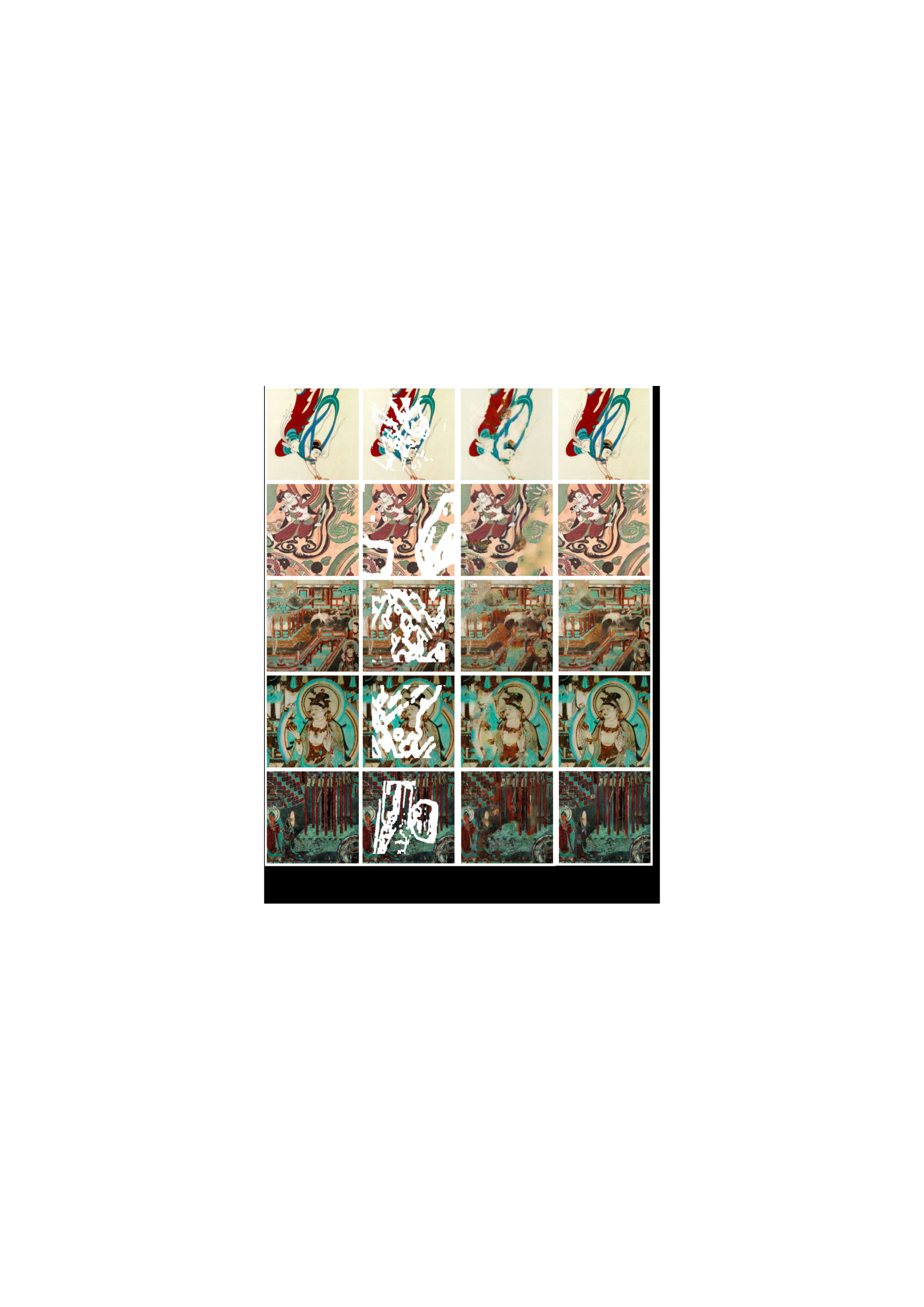
Figure 2
Results of the adversarial diffusion network on simulated damaged murals of complex patterns
Note. Results of the ADN model proposed by Lian et al. (2025) displayed advanced capabilities
in restoring complex murals. Adapted from “Adversarial Diffusion Network for Dunhuang Mural
Inpainting”, by Lian et al., 2025, IEEE Transactions on Circuits and Systems for Video Technology,
35(7), 6561–6574.
7
Page 7 of 14

terest so as to ensure the survival of the cultural heritage is the next generation of people.
Measures for educating and inspiring the domestic (Chinese) adolescents are distinct from
those for the international audience, as they have different backgrounds. This section will
draw its focus on the former.
A new consumerism phenomenon advocating cultural identity and cultural confi-
dence, known as the “National Trend” (Guochao), has emerged in China, especially
amongst the younger generation. According to Liu (2021), relevant queries on the Chi-
nese search engines have increased by four times, peaking in 2019 at 26 billion queries.
Leveraging this trend is a way to promote the vibrant cultures of the Dunhuang Grottoes,
and such leverage would be made possible easily by the use of GenAI.
On the technical side, Sun and Gao (2023) discussed that the use of style transfer
has long been a dominant trend in the field of artistic creation. They further stated that,
however, the use of such technology in the context of Dunhuang Arts is insufficiently
explored. Trained models already exist and are capable of producing promising results,
as shown in both Figure 3 and Figure 4.
On the public acceptance side, while no major use of GenAI in the context of Dun-
huang Grottoes has been reported, similar cases can be looked at as a reference. Zhang et
al. (2023) have conducted a study of the public’s perception of the sustainability of intan-
gible cultural heritage on AI-generated New Year products. The results showed that the
public is generally engaged and supportive of the attractive products, revealing a positive
correlation between younger generation’s cultural identity and economic boost.
It is predicted that the DHA could take advantage of the current National Trend and
the cutting-edge technologies, with proper online and offline marketing strategies, to pro-
mote the Dunhuang Grottoes, as its nature of being a valuable traditional Chinese cultural
heritage is in line with the values of the National Trend and aligns with the contempo-
rary Chinese government’s policies of promoting cultural confidence among its citizens
(Liu, 2021). Furthermore, the DHA can borrow the experience of Shao (2023) to gain
economic benefits from the market of intellectual property, which can be used to fund the
preservation work, creating a positive feedback loop.
To conclude, the use of AI technologies in artistic style transfer can be beneficial to the
preservation of the Dunhuang Buddhist heritage by raising public awareness and interest.
4 Concerns Raised Against AI Technologies in Buddhist
Heritage Preservation
4.1 Forfeited Authenticity and Originality in AI-Restored Artefacts
While the algorithms and models discussed earlier have shown remarkable accuracy in
the restoration of artefacts, one must bear in mind that by no means can the AI-generated
artefacts be “authentic” howsoever they resemble the original. Regarding generated arts,
Tiribelli et al. (2024) posed two critical questions regarding the authorship and whether
the generated art is eligible to be claimed as “original” or “authentic”.
8
Page 8 of 14
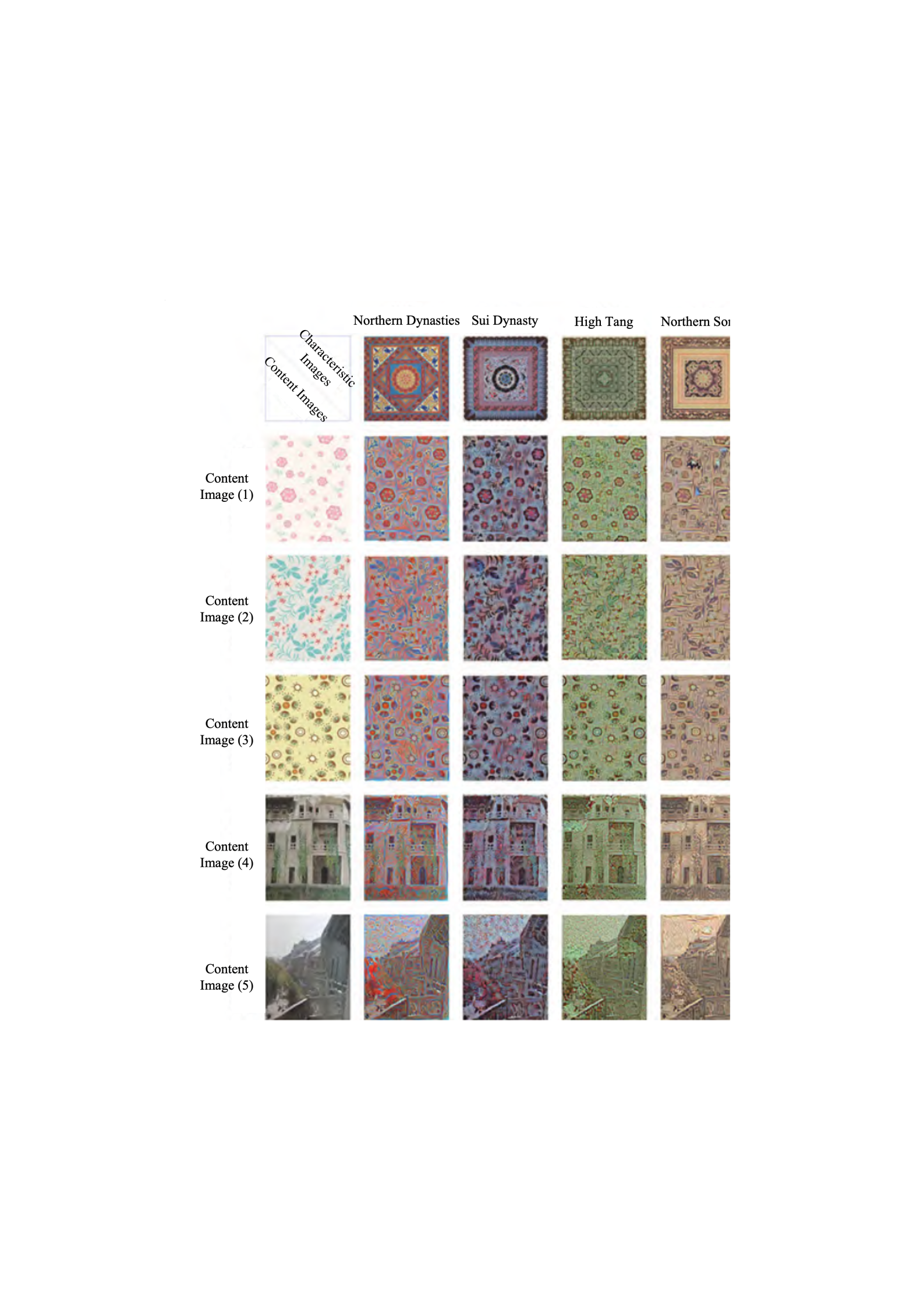
Figure 3
Examples of results of merging Dunhuang art styles with modern images using different models
and algorithms
Note. The original figure were in Chinese. The captions are translted into English by the au-
thor. Adapted from “Innovative Design of Dunhuang Decorative Patterns Based on Image Style
Transfer Algorithm”, by Sun and Gao, 2023, Color, 446(09), 100–103.
9
Page 9 of 14
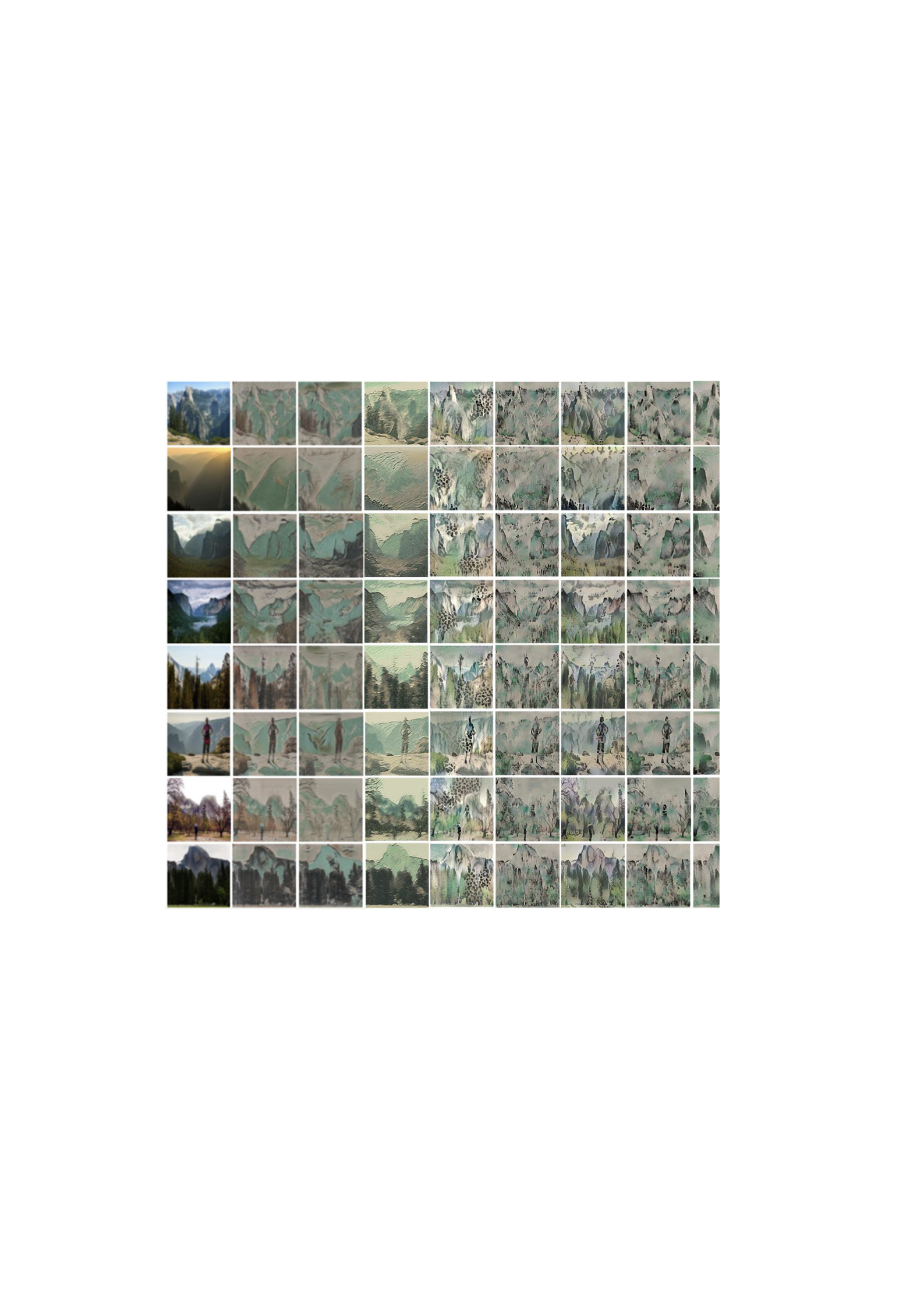
Figure 4
Examples of results of tranfering Dunhuang art styles onto new images by different models
Note. The left-most column are the original images, while the others are the results of Dunhuang
art styles being transferred on the original images by different models. Adapted from “Artificial
Intelligence for Dunhuang Cultural Heritage Protection: The Project and the Dataset”, by Yu et al.,
2022, International Journal of Computer Vision, 130(11), 2646–2673.
10
Page 10 of 14

While authorship is not within the scope of discussion of this paper, the authenticity,
however, is difficult to guarantee. As discussed earlier, GenAI relies on the datasets on
which they were trained. Even if the algorithms were designed to be absolutely neutral,
which only exist in an ideal condition, the dataset can already be comprimised with bias
of which the developers are not aware of. Plus, since it is inevitable to have an imbalance
in the number of available data amongst different categories of data, AI models tend to
misinterpret parts on which they were not adequately trained. Fu et al. (2025) mentioned
an incident of an AI model empolyed by the Shanghai Digital Heritage Centre misinter-
preting Tibetan cultural elements due to the fact that it was trained predominantly on the
cultures of the Han dynasty. It is therefore inferred that contemporary AI technologies are
not yet reliable in terms of authenticity.
Even if the authenticity can be guaranteed in a hypothetical scenario, one must recog-
nise that “authenticity” and “originality” are two distinct concepts. Y. Li (2022) mentions
two types of authenticity – moral authenticity and type authenticity, which asserts the AI
models’ ability to extract the artist’s intentions from the style of the original artefacts.
The ability to extract qualifies the AI-generated artefacts to be “authentic”, as they were
created with the original artist’s process of thoughts, however by no means be “original”.
It comes naturally that one would argue that the AI-generated or -restored artefacts forfeit
their authenticity, if not originality.
If such originality issue is not addressed, although the application of AI technologies
advantages the technical aspect of preservation, it may undermine the message conveyed
by the artefacts, which in turn comprimises the humanity aspect of preservation. As of
the case of Dunhuang Grottoes, the restored artefacts proposed by Yu et al. (2022) and
Lian et al. (2025) are not currently displayed for the general public, but rather for research
purposes only. Therefore, the Dunhuang Grottoes are not in immediate risk of forfeiture
of authenticity and originality, but thorough assertions must be made before an official
endorsement can be made.
4.2 Misinformation and Hallucination of LLMs
It is of common knowledge that LLMs are prone to generating misinformation, or
having hallucinations when they attempt to generate output in a less familiar area. This
behaviour is rooted in the way LLMs produce output, thus inevitable (Saha et al., 2025).
In particular, in the context of Dunhuang Grottoes, the LLMs are expected to provide
service in a field that is highly specialised and requires expertise. Frankly, as Shen et
al. (2024) have shown, despite the unrivalled mastery of languages, LLMs are falling
short in terms of knowledge in the field of seconary-education-level history, let alone the
specialised knowledge in the field of archaeology and Buddhist history. The research by
N. Jiang (2024) also backs this claim, that is, there exists a high potential for LLMs to
provide incorrect information when prompted.
While measures have been proposed to combat this issue, such as using multiple lay-
ers of LLMs to verify the reliability of the output (Saha et al., 2025; Verspoor, 2024),
the application of such error-prone technologies to provide public education remains a
concerning risk of comprimising the purpose of preservation.
11
Page 11 of 14

5 Conclusion
This article endeavoured to critically evaluate the use of AI technologies in the preser-
vation of Buddhist heritage by using the Dunhuang Grottoes as a case study. Through the
exploration of the current applications, the importance of AI in archaeological research
and preservation is acknowledged. On the contrary, the concerns regarding such tech-
nologies and applications are also briefly discussed, from both the ethical and technical
perspectives. It is concluded that while the use of AI technologies does indeed benefit
the preservation of Buddhist heritage through several means, critical evaluations of the
applications are advocated to ensure the sustainability of the preservation work.
References
Ballester, C., Bertalmio, M., Caselles, V., Sapiro, G., & Verdera, J. (2001). Filling-in by
joint interpolation of vector fields and gray levels. IEEE Trans Image Process,
10(8), 1200–11. https://doi.org/10.1109/83.935036
Barcelo, J. A. (1995). Back-propagation algorithms to compute similarity relationships
among archaeological artefacts. In J. Wilcock & K. Lockyear (Eds.), CAA1993:
Computer applications and quantitative methods in archaeology 1993 (pp. 165–
176). Tempvs Reparatvm.
Bertalmio, M., Sapiro, G., Caselles, V., & Ballester, C. (2000). Image inpainting. Pro-
ceedings of the 27th Annual Conference on Computer Graphics and Interactive
Techniques, 417–424. https://doi.org/10.1145/344779.344972
Bevan, A., Li, X., Martin
´
on-Torres, M., Green, S., Xia, Y., Zhao, K., Zhao, Z., Ma, S.,
Cao, W., & Rehren, T. (2014). Computer vision, archaeological classification and
china’s terracotta warriors. Journal of Archaeological Science, 49, 249–254. https:
//doi.org/10.1016/j.jas.2014.05.014
Chen, Y., Du, W., & Zhao, M. (2024). Mural inpainting algorithm based on semantic
reasoning and joint learning. Journal of Beijing University of Posts and Telecom-
munications, 47(5), 73–80. https://doi.org/10.13190/j.jbupt.2023-193
Dunhuang Research Academy. (n.d.). Smart library. https://cave17 . e- dunhuang.com/
smartlibrary.html
Fu, Y., Shi, K., & Xi, L. (2025). Artificial intelligence and machine learning in the preser-
vation and innovation of intangible cultural heritage: Ethical considerations and
design frameworks. Digital Scholarship in the Humanities, 40(2), 487–508. https:
//doi.org/10.1093/llc/fqaf034
Gansu Cultural Heritage Bureau. (2025, July). Digital library cave platform: A creative
approach of digitising and sharing of dunhuang artefacts. https://wwj.gansu.gov.
cn/wwj/c105438/202507/174168131.shtml
Ge, S., Dill, A., Kang, E., Li, C.-L., Zhang, L., Zaheer, M., & Poczos, B. (2019). Devel-
oping creative ai to generate sculptural objects. https://arxiv.org/abs/1908.07587
Helm, J. M., Swiergosz, A. M., Haeberle, H. S., Karnuta, J. M., Schaffer, J. L., Krebs,
V. E., Spitzer, A. I., & Ramkumar, P. N. (2020). Machine learning and artificial
intelligence: Definitions, applications, and future directions. Current reviews in
musculoskeletal medicine, 13(1), 69–76.
Jiang, N. (2024). Digital protection and promotion of dunhuang arts in the context of
artificial intelligence. Journal of Dunhuang Studies, 3(3), 90–97. https://doi.org/
10.3969/j.issn.1001-6252.2024.03.009
12
Page 12 of 14

Jiang, X., Xie, H., Zhang, R., Luo, Z., Zhang, Z., & Li, Y. (2023). Effect of abnor-
mal weather on the microenvironment of mogao cave 285, dunhuang. Journal
of Physics: Conference Series, 2654(1). https://doi.org/10.1088/1742-6596/2654/
1/012007
Jiang, X., Hadid, A., Pang, Y., Granger, E., & Feng, X. (2019). Deep learning in object
detection and recognition. https://doi.org/10.1007/978-981-10-5152-4
Li, H. (2024, July). Generative artificial intelligence assisting the digitisation and restora-
tion of dunhuang artefacts. https://news.sciencenet.cn/htmlnews/2024/7/525774.
shtm
Li, Y. (2022). AI restoration brings ‘dying’ masterpieces back to life, but tricks copyright?
International Journal of Law and Information Technology, 30(3), 368–384. https:
//doi.org/10.1093/ijlit/eaac023
Lian, J., Zhang, J., Du, S., Liu, Q., & Liu, J. (2025). Adversarial diffusion network for
dunhuang mural inpainting. IEEE Transactions on Circuits and Systems for Video
Technology, 35(7), 6561–6574. https://doi.org/10.1109/tcsvt.2025.3537685
Liu, Z. (2021). The rise of “Guochao” and the analysis of its reasons. Sinogram Culture,
22(13), 147–148. https://doi.org/10.14014/j.cnki.cn11-2597/g2.2021.22.065
Pathak, D., Kr
¨
ahenb
¨
uhl, P., Donahue, J., Darrell, T., & Efros, A. A. (2016). Context en-
coders: Feature learning by inpainting. 2016 IEEE Conference on Computer Vi-
sion and Pattern Recognition (CVPR), 2536–2544. https://doi.org/10.1109/CVPR.
2016.278
Resler, A., Yeshurun, R., Natalio, F., & Giryes, R. (2021). A deep-learning model for
predictive archaeology and archaeological community detection. Humanities and
Social Sciences Communications, 8(1). https : / / doi . org/ 10 . 1057 / s41599 - 021 -
00970-z
Saha, A., Gupta, B., Chatterjee, A., & Banerjee, K. (2025). You believe your LLM is
not delusional? Think again! A study of LLM hallucination on foundation models
under perturbation. Discover Data, 3(1). https://doi.org/10.1007/s44248- 025-
00041-7
Shao, X. (2023). Research on the digital transformation of dunhuang cultural creativity.
Advances in Social Sciences, 12(09), 5353–5362. https://doi.org/10.12677/ass.
2023.129734
Shen, L.-P., He, C.-F., Cao, D.-X., Zhu, Y.-S., & Wu, Y.-H. (2024). Evaluation and analy-
sis of large language models application in of historical discipline middle schools.
Modern Educational Technology, 34(2), 62–71. https://doi.org/10.3969/j.issn.
1009-8097.2024.02.007
Sun, J., & Gao, H. (2023). Innovative design of dunhuang decorative patterns based on
image style transfer algorithm. Color, 446 (09), 100–103.
Tiribelli, S., Pansoni, S., Frontoni, E., & Giovanola, B. (2024). Ethics of artificial intel-
ligence for cultural heritage: Opportunities and challenges. IEEE Transactions on
Technology and Society, 5(3), 293–305. https://doi.org/10.1109/tts.2024.3432407
United Nations Educational, Scientific and Cultural Organization. (2024a). Conservation
of cultural heritage. https://uis.unesco.org/node/3080254
United Nations Educational, Scientific and Cultural Organization. (2024b). Cultural her-
itage. https://uis.unesco.org/en/glossary-term/cultural-heritage
Verschoof-van der Vaart, W. B., & Lambers, K. (2021). Applying automated object de-
tection in archaeological practice: A case study from the southern netherlands.
Archaeological Prospection, 29(1), 15–31. https://doi.org/10.1002/arp.1833
13
Page 13 of 14

Verspoor, K. (2024). ‘fighting fire with fire’ — using LLMs to combat LLM hallucina-
tions. Nature, 630(8017), 569–570. https://doi.org/10.1038/d41586-024-01641-0
Villaespesa, E., & Crider, S. (2021). Computer vision tagging the metropolitan museum
of art’s collection. Journal on Computing and Cultural Heritage, 14(3), 1–17.
https://doi.org/10.1145/3446621
Yang, C., Lu, X., Lin, Z., Shechtman, E., Wang, O., & Li, H. (2017). High-resolution
image inpainting using multi-scale neural patch synthesis. 2017 IEEE Conference
on Computer Vision and Pattern Recognition (CVPR), 4076–4084. https://doi.org/
10.1109/CVPR.2017.434
Yu, T., Lin, C., Zhang, S., Wang, C., Ding, X., An, H., Liu, X., Qu, T., Wan, L., You, S.,
Wu, J., & Zhang, J. (2022). Artificial intelligence for dunhuang cultural heritage
protection: The project and the dataset. International Journal of Computer Vision,
130(11), 2646–2673. https://doi.org/10.1007/s11263-022-01665-x
Zhang, B., Cheng, P., Deng, L., Romainoor, N. H., Han, J., Luo, G., & Gao, T. (2023).
Can AI-generated art stimulate the sustainability of intangible cultural heritage? a
quantitative research on cultural and creative products of new year prints generated
by ai. Heliyon, 9(10), e20477. https://doi.org/10.1016/j.heliyon.2023.e20477
14
Page 14 of 14
This is the individual essay submitted for the course CCCH9044. Its source is uploaded here
as-is without any modifications/corrections. The author has received an overall grade of A+
in the course, of which 35% was attributed to this essay.
